


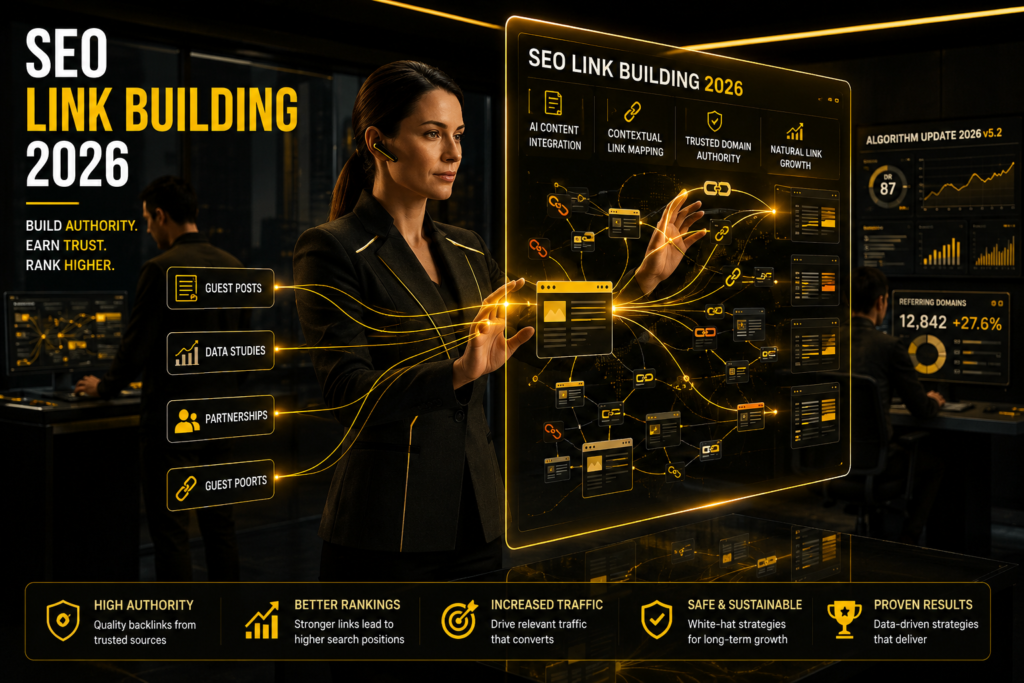
SEO link building in 2026 is not fundamentally different from what worked in 2024 but the execution standards required to produce results without triggering penalties have risen significantly. The March 2026 Spam Update, the December 2025 core update, and the continued evolution of SpamBrain have closed off shortcuts that were still producing results 18 months ago. This guide covers the state of link building as it actually stands in 2026: what Google changed and why it matters, which tactics still work and at what quality standard, what specific practices got burned in recent updates, and the strategic framework for building links this year that produces durable page-one rankings rather than temporary movement followed by core update losses.
Table of Contents
- The state of link building in 2026
- What changed: Google updates that reshaped link building
- What still works in 2026
- What got burned: tactics that no longer work
- PBN links in 2026: the honest assessment
- The rising quality bar across all link types
- The 2026 link building framework
- FAQ
- Conclusion
Key Takeaways
- The fundamental mechanism of link building has not changed in 2026 — links from authoritative, topically relevant pages still pass equity that influences rankings. The quality standards required for that equity to pass have risen significantly.
- The March 2026 Spam Update and December 2025 core update penalised sites relying heavily on scaled AI-generated PBN content, public link farm networks, and mass low-quality anchor-text link schemes.
- Quality PBN links — diverse hosting, genuine 600+ word articles, Trust Flow verified domains, gradual indexation, conservative anchor text — continued to perform through all 2025-2026 updates and remain the primary link building mechanism in competitive niches.
- The biggest shift in 2026 is the E-E-A-T elevation for YMYL content — finance, health, legal, and crypto sites face higher quality thresholds than ever, making low-quality links actively counterproductive for these niches.
- The sites gaining ground in competitive SERPs in 2026 are those combining quality PBN links with genuine E-E-A-T signals — not those relying on either alone.
The state of link building in 2026
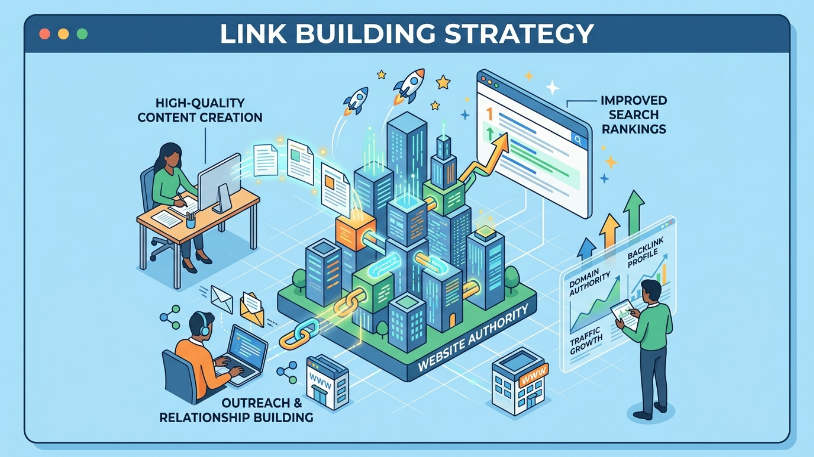
Link building in 2026 sits at an interesting inflection point. On one hand, Google has never been more capable of detecting and discounting low-quality manufactured links. On the other hand, the top-ranking pages for competitive commercial keywords in every major niche continue to show large numbers of purchased and manufactured links in their profiles. The mechanism works. The execution standards required to make it work safely have risen.
The practical reality: a practitioner who was building quality links in 2024 using diverse hosting, genuine content, conservative anchor text, and gradual indexation has seen minimal disruption to their campaigns from the 2025-2026 update cycle. A practitioner who was using bulk AI content PBN networks, shared hosting farms, or aggressive commercial anchor text has seen significant ranking losses across the March 2026 Spam Update and December 2025 core update.
This divergence — quality campaigns unaffected, low-quality campaigns hit hard — is the defining characteristic of the 2026 link building landscape. The updates did not kill link building. They raised the minimum quality threshold required for links to produce durable results.
What changed: Google updates that reshaped link building
March 2026 Spam Update
The most recent major update at time of writing targeted three specific patterns: scaled AI content used primarily for link manipulation (PBN networks running unedited AI output at volume), link spam through expired domain abuse (buying expired domains and immediately pointing all their links at money sites without genuine content rebuilding), and site reputation abuse where established sites allowed low-quality sponsored content to be published under their domain authority.
Sites hit by the March 2026 Spam Update typically showed 30-60% organic traffic declines within 2-3 weeks of rollout. Most affected were sites in the 50-500 referring domain range that had built aggressively using bulk low-quality PBN campaigns. Sites with diverse, quality-controlled link profiles showed minimal impact.
December 2025 Core Update
The December 2025 core update had two primary effects relevant to link building. First, it significantly elevated the weight of E-E-A-T signals for YMYL content — sites in finance, health, crypto, and legal that had been building authority primarily through PBN links without genuine expertise signals saw ranking losses for their most competitive keywords. Second, it improved detection of the “helpful content shellgame” — sites that built authority through links to thin content, then used that authority to rank commercial pages with minimal editorial value.
Helpful Content system continuous evolution
The Helpful Content system, integrated into the core algorithm in March 2024, has continued to improve through 2025-2026. Its site-wide quality signal means that the content quality across an entire domain — including PBN donor sites — affects how much equity the links those sites pass are worth. A PBN domain that progressively accumulates thin, unhelpful content degrades in quality classification over time, reducing the equity contribution of all its outbound links. This makes ongoing content quality management of PBN sites an active requirement in 2026, not a set-and-forget operation. Full implications in our Google penalties guide.
What still works in 2026
1. Quality PBN links
Quality PBN links — Trust Flow 15+ domains, diverse hosting infrastructure, genuine 600+ word articles, gradual indexation, conservative anchor text distribution — continued to produce ranking results through all 2025-2026 updates. The top-ranking pages for competitive commercial keywords in iGaming, finance, affiliate SEO, and SaaS still show quality PBN links in their profiles. The mechanism works; the execution standard required has risen. See our complete PBN SEO guide and PBN link building strategy for the current execution standards.
2. Niche edits on aged editorial pages
Niche edits on genuinely established, organically-trafficked pages from real editorial sites continue to perform strongly. The aged page authority advantage — a page that has accumulated real Trust Flow from years of editorial link earning — passes stronger quality signals than newly created content regardless of what algorithm updates target. The quality bar for sourcing niche edit placements has risen: sites built specifically to sell links are being identified and discounted faster. Genuine editorial sites with real organic traffic and real readers remain the most durable source of link equity available. See our niche edits guide.
3. Digital PR and genuine editorial outreach
Original research, data studies, genuinely newsworthy content, and tools that solve real problems continue to earn editorial links from mainstream publications. The time and resource investment is higher than PBN links, and the results are slower — but editorial links from DR 70+ publications with genuine reader bases produce Trust Flow contributions that PBN links cannot replicate. In 2026, the strongest competitive profiles combine digital PR links (for Trust Flow and E-E-A-T signals) with quality PBN links (for commercial page authority at volume).
4. Tiered link building
Second tier link building — building links to Tier 1 PBN article pages to raise their URL Rating — continues to multiply the equity contribution of existing Tier 1 placements. The Tier 2 sources (Web 2.0 posts, social bookmarks, forum profiles) that work best are those where the content is genuinely indexable and passes the Helpful Content quality threshold at the platform level. Thin Web 2.0 content is less effective as Tier 2 than it was in 2023; substantive 400+ word Web 2.0 posts continue to perform. Full strategy in our second tier link building guide.
5. Local citation building for local SEO
For local SEO, consistent citation building across established local directories remains one of the highest-ROI link building actions available. The Local Pack ranking algorithm weights citation consistency and NAP accuracy alongside backlink authority — making citations uniquely valuable for local business ranking in a way they are not for national keywords. Our local SEO PBN guide covers how citations and PBN links work together in a complete local authority strategy.
What got burned: tactics that no longer work
Bulk AI content PBN networks
PBN networks running completely unedited AI output at scale — 300-word AI filler articles published across hundreds of sites — were specifically targeted by both the March 2026 Spam Update and the ongoing Helpful Content classifier. Analysis of the December 2025 core update found 85-95% organic traffic losses for domains publishing completely unedited AI output at scale. PBN domains running this content model have seen their link equity contribution effectively eliminated. The domains still exist in Ahrefs with their DR intact — but the links they pass are producing no ranking movement.
Shared infrastructure PBN farms
Public PBN networks with shared hosting infrastructure — identifiable through IP range analysis — have been progressively mapped and discounted by SpamBrain. Networks that were sold through open SEO marketplaces and forum threads are the most thoroughly mapped. Sites that purchased links from these networks in 2023-2024 have seen those links quietly devalued through spam update cycles without receiving manual actions.
Mass exact match anchor campaigns
Campaigns that built 20-50 links per month with 30-40% exact match commercial anchor text are showing manual action footprints in 2026. Penguin (running continuously since 2016) has been recalibrating these profiles with each crawl cycle. Sites with over-optimised historical anchor profiles that are now building new links are finding that the marginal impact of each new link is lower than expected — the existing anchor over-optimisation is limiting the positive effect of new equity.
Guest post link schemes
The “write a 500-word article with 2 commercial anchor backlinks for a DR 20 site” guest post model has been significantly devalued. Google has improved detection of guest post link schemes — sites that publish primarily sponsored content with commercial links, that have bylines from SEO outreach rather than genuine contributors, and that show topically inconsistent content from multiple different “authors” across unrelated niches. The form of guest posting that still works is genuine editorial contribution to relevant publications — not the mass-produced outreach model that dominated 2019-2023.
PBN links in 2026: the honest assessment

PBN links work in 2026. The evidence is in the SERPs — open Ahrefs on any competitive commercial SERP and examine the backlink profiles of the top-ranking pages. PBN link signatures are present in the majority of competitive commercial ranking profiles. The mechanism has not been broken by algorithm updates; specific low-quality implementations of the mechanism have been targeted and discounted.
The honest risk assessment for 2026: quality PBN links (Trust Flow verified, diverse hosting, genuine content, gradual indexation, conservative anchor text) carry a manageable risk profile comparable to what they carried in 2023. Low-quality PBN links (shared infrastructure, AI filler, simultaneous indexation, over-optimised anchors) carry significantly higher risk than in 2023 — the updates specifically targeted these patterns.
The practical implication: the gap between the risk profile of quality and low-quality PBN execution has widened significantly through 2025-2026. In 2020, you could get away with mediocre execution. In 2026, you cannot. The quality bar has risen to a point where the difference between a well-executed and poorly-executed PBN campaign is the difference between consistent ranking gains and a core update loss.
For the complete risk framework and penalty types, see our are PBN links safe guide and our Google penalties guide.
The rising quality bar across all link types
The unifying theme across all changes in the 2025-2026 link building landscape is a rising quality bar — not just for PBN links but for every link type. Here is what that rising bar looks like in practice across each major link building mechanism:
PBN links: minimum standard in 2026
Trust Flow 15+ (not just DR), diverse hosting at Class C IP level, genuine 600+ word articles with human editorial review, gradual indexation across 3-4 weeks, maximum 5-8% exact match anchor text, single outbound link articles for maximum equity. Providers who cannot meet all of these criteria are operating below the 2026 minimum standard. See our buy PBN links guide for the full five-check verification process.
Niche edits: minimum standard in 2026
Placement on pages with genuine organic traffic (not just domain DR), URL Rating 10+ on the specific article page, topically relevant content context, dofollow in article body, and the site not built primarily to sell links. Sites that were viable niche edit sources in 2022 but have since filled up with paid link placements to unrelated sites may have degraded in quality signal even if their metrics still look good.
Guest posts: minimum standard in 2026
Genuine editorial sites with real audiences, topically relevant to your money site niche, publishing standards that include editorial review (not just “we accept any submission”), real author bylines with verifiable online presence, and link placement that reads naturally in genuine article content. Guest posts placed purely for link building on sites that exist primarily for that purpose are increasingly identified as link schemes.
The 2026 link building framework
Synthesising the 2026 landscape into a practical strategic framework: the most competitive profiles in 2026 combine four layers, each serving a different function in the overall authority structure.
Layer 1: Quality PBN links (50-65% of budget)
The primary authority volume mechanism. Quality PBN links provide the controlled, targeted authority to commercial pages that cannot earn editorial links organically. Execute to the 2026 standard: Trust Flow verified, diverse hosting, genuine content, gradual indexation, conservative anchors. This is the foundation of authority accumulation for competitive commercial keywords. See our complete PBN link building strategy.
Layer 2: Niche edits on aged editorial pages (15-20% of budget)
Provides aged page authority and link profile diversity that PBN links alone cannot replicate. Niche edits on genuinely established pages contribute both equity and the Trust Flow from editorial sources that raises overall domain trust profile. Essential for YMYL niches where Google specifically looks for genuine editorial endorsement signals alongside PBN-built authority volume.
Layer 3: Tier 2 amplification (15-20% of budget)
Raises URL Rating on Tier 1 PBN article pages, multiplying the equity contribution of every existing Tier 1 placement. The most cost-efficient way to get more ranking power from the links you have already built. Social bookmarks, Web 2.0 posts, and secondary PBN links deployed 2-3 weeks after Tier 1 indexation. Full framework in our second tier link building guide.
Layer 4: Brand signals and citations (5-10% of budget)
Structured citations, brand profile links on high-DR platforms (LinkedIn, GitHub, Crunchbase), and organic social sharing that generates branded search volume. These signals do not directly pass PageRank but they contribute to the entity recognition and trust profile that Google assesses holistically. For local businesses, citation consistency is a direct ranking factor. For all sites, brand presence signals make the overall profile look like a real brand rather than a manufactured link acquisition operation.
FAQ
Does link building still work in 2026?
Yes. Links remain one of Google most important ranking signals and the mechanism of authority transfer through links has not changed. What has changed is the quality standard required for links to pass ranking-moving equity. Quality links — Trust Flow verified domains, genuine content, diverse infrastructure, conservative anchor text — continue to produce first-page rankings for competitive keywords. Low-quality links — shared infrastructure, AI filler content, over-optimised anchors — are being discounted faster and more thoroughly than at any point in SEO history.
What link building tactics work best in 2026?
The four tactics with the strongest 2026 evidence base: quality PBN links (diverse hosting, genuine content, gradual indexation), niche edits on aged editorial pages with real organic traffic, second tier link building to amplify Tier 1 page URL Rating, and digital PR for Trust Flow contribution and E-E-A-T signals. Each serves a different function — commercial page authority, editorial trust signals, equity amplification, and entity recognition respectively. The strongest competitive profiles in 2026 combine all four.
What happened to link building in the 2025-2026 Google updates?
The March 2026 Spam Update specifically targeted three patterns: scaled AI content in PBN networks, expired domain link abuse, and site reputation abuse through low-quality sponsored content. The December 2025 core update elevated E-E-A-T standards for YMYL niches and improved detection of authority-building for thin commercial content. Sites using quality execution were minimally affected. Sites using bulk AI PBN content, shared hosting farms, and mass commercial anchor text campaigns saw significant ranking losses.
How many links do I need to rank in 2026?
The same way you have always calculated it: check the average referring domain count of the top 5 pages ranking for your target keyword in Ahrefs, subtract your current count, and build quality links to close 70-80% of that gap. The number itself has not changed significantly — what has changed is that the per-link equity contribution of quality links has become more differentiated from low-quality links. In practice this means fewer quality links produce more ranking impact than larger numbers of mediocre links.
Are PBN links still effective in 2026?
Yes — for quality implementations. The top-ranking pages in competitive commercial niches continue to show PBN link signatures in their profiles. The March 2026 Spam Update targeted specific poor-quality implementations (bulk AI content networks, shared infrastructure farms) rather than the PBN mechanism itself. Quality PBN campaigns that were unaffected by the update demonstrate this distinction clearly. The full honest assessment is in our are PBN links safe guide.
Conclusion
SEO link building in 2026 rewards quality and punishes shortcuts more effectively than at any previous point in Google history. The tactics that were producing ranking results through sloppy execution in 2022-2023 are producing penalty risk in 2026. The tactics that were producing ranking results through quality execution in 2022-2023 are still producing ranking results in 2026 — with a modest increase in the minimum quality threshold required.
The strategic shift for 2026 is not to a fundamentally different set of tactics. It is to a fundamentally higher execution standard across the same set of tactics: quality PBN links rather than bulk cheap links, niche edits on genuinely established pages rather than link-farm insertions, Tier 2 amplification with substantive Web 2.0 content rather than thin stubs, and brand presence signals alongside the link building programme rather than links alone.
The sites that dominate competitive SERPs in 2026 are the ones that understood this quality threshold shift before the March 2026 update, not the ones reacting to it after their rankings dropped.
Build to the 2026 quality standard from the start. Quality PBN backlinks for 2026 — Trust Flow verified, diverse hosting, 600+ word expert articles, gradual indexation, anchor text specified per your brief. Supporting guides: complete PBN link building strategy, how to buy PBN links in 2026, niche edits for editorial trust signals, Google penalties — what the 2026 updates targeted, are PBN links safe in 2026, and our complete PBN SEO guide.

Ben Davis is a seasoned SEO strategist with over a decade of hands-on experience in off page SEO, link building, and private blog network management.
He has helped 600+ agencies and professionals achieve top rankings in competitive niches including iGaming, crypto, CBD, and finance through data driven PBN strategies.