


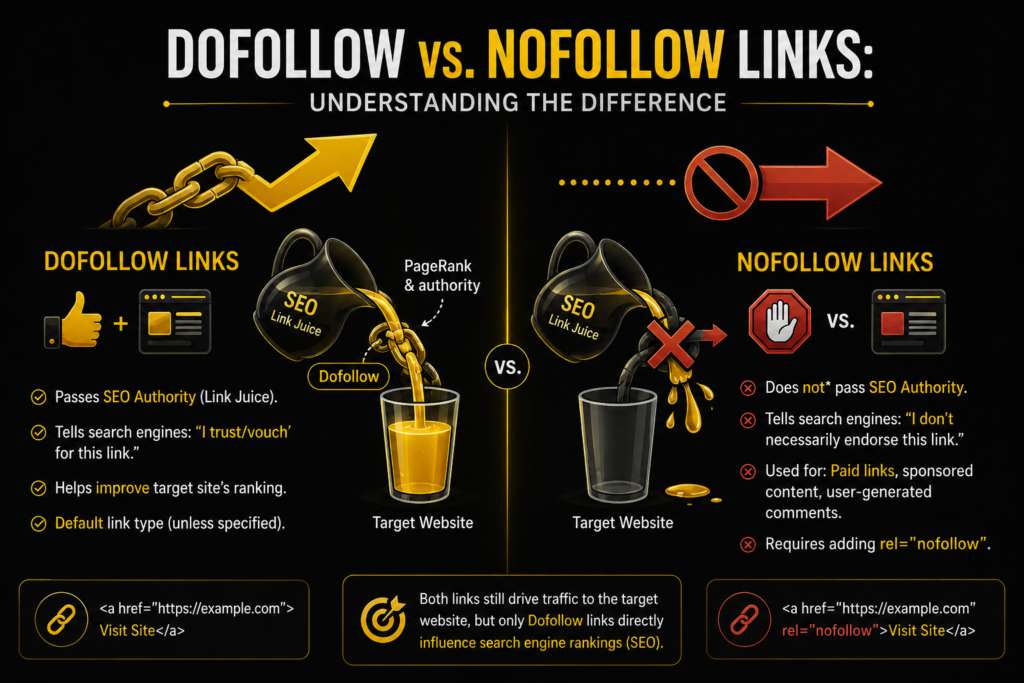
The difference between dofollow vs nofollow links is one of the most fundamental concepts in link building — and one of the most frequently misunderstood. Most explanations stop at “dofollow passes authority, nofollow doesn’t” and leave out everything that actually matters for building a link strategy: when nofollow links still help rankings, what Google changed in 2019 that makes old explanations wrong, how to build the right dofollow-to-nofollow ratio in your link profile, and what rel=sponsored and rel=ugc mean for PBN practitioners. This guide covers all of it clearly, in plain terms, with direct implications for link building decisions.
Table of Contents
- What is a dofollow link?
- What is a nofollow link?
- The core difference and what it means for SEO
- What Google changed in 2019 — and why it matters
- When nofollow links still help your SEO
- The right dofollow to nofollow ratio in a healthy link profile
- Dofollow links and PBN link building
- How to check if a link is dofollow or nofollow
- FAQ
- Conclusion
Key Takeaways
- Dofollow links pass link equity (PageRank) to the linked page and directly contribute to its authority and ranking potential. Nofollow links do not pass equity in the traditional sense.
- Google changed its treatment of nofollow in September 2019 — it is now a “hint” rather than a directive, meaning Google may choose to follow nofollow links for crawling and indexing purposes even if it does not pass PageRank through them.
- Nofollow links from high-authority domains still generate real SEO value through referral traffic, brand visibility, branded search growth, and indexation acceleration — none of which require equity transfer.
- A natural link profile contains a mix of dofollow and nofollow links. A profile that is 100% dofollow looks manufactured and can attract algorithmic scrutiny.
- Every PBN link and every quality niche edit should be dofollow — a nofollow PBN link is a wasted placement. Verify dofollow status after placement using Ahrefs or the browser source code.
What is a dofollow link?
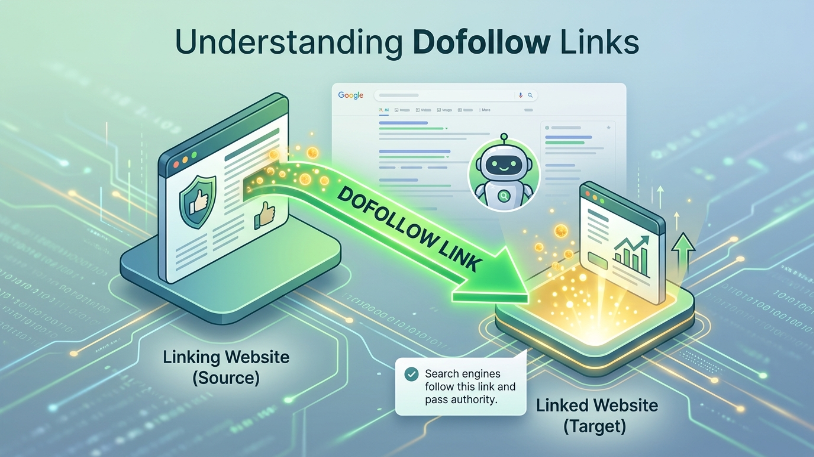
A dofollow link is a standard HTML hyperlink with no attribute that tells search engine crawlers to ignore it. Despite the name, “dofollow” is not an actual HTML attribute — there is no rel="dofollow" tag. A dofollow link is simply any link that does not have the rel="nofollow", rel="sponsored", or rel="ugc" attribute.
When Googlebot crawls a page and encounters a dofollow link, it follows that link to the destination page and passes a portion of the source page’s authority — called PageRank or link equity — to the destination. This equity transfer is what makes dofollow links valuable for SEO: they directly raise the authority of the linked page, which Google uses as a signal to determine how prominently to rank that page.
A standard dofollow link in HTML looks like this: <a href="https://example.com/target-page">anchor text</a>. No rel attribute, no qualification — just the link itself. This is the default state of any hyperlink on the web.
How much equity a dofollow link passes depends on the authority of the source page (its URL Rating), the number of other outbound links competing for equity on the same page, and the topical relevance of the linking domain to the linked page. These mechanics are covered in full in our backlink equity guide.
What is a nofollow link?
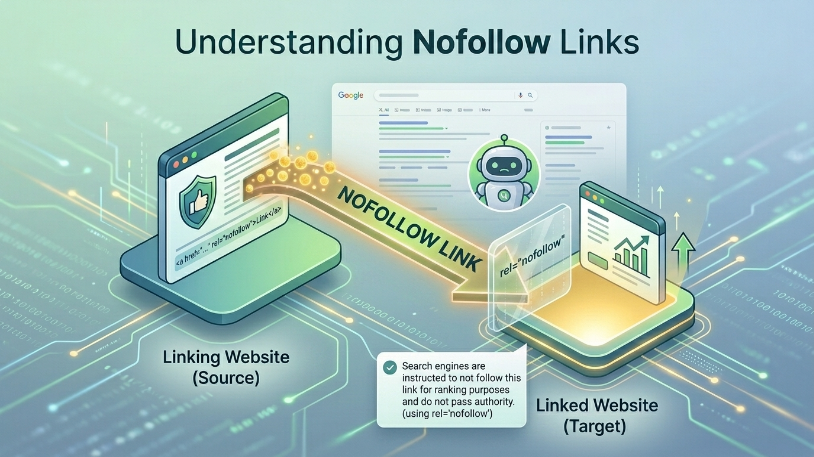
A nofollow link is a hyperlink with the rel="nofollow" attribute added by the linking site. It was introduced by Google in 2005 to give publishers a way to link to content without endorsing it — originally created to combat comment spam, where spammers posted links in blog comments to gain PageRank.
A nofollow link looks like this in HTML: <a href="https://example.com/target-page" rel="nofollow">anchor text</a>.
Common places you encounter nofollow links: Wikipedia (all external links are nofollow), press release distribution sites, Q&A platforms like Quora and Stack Exchange, many news site comment sections, social media platforms (most), and paid advertising or sponsored content where the host is following advertorial guidelines.
The two new rel attributes introduced in 2019
In September 2019, Google introduced two additional link attributes alongside nofollow:
rel=”sponsored”: For links that are part of advertisements, sponsorships, or paid placements. Google specifically asks that paid links — including PBN links and paid guest posts — use this attribute rather than nofollow. In practice, almost no PBN operator uses it because it would explicitly signal a paid link to Google.
rel=”ugc”: For user-generated content — links in comments, forum posts, or other content contributed by users rather than editorial staff. Tells Google the link was not placed by the site owner.
The core difference and what it means for SEO
| Factor | Dofollow link | Nofollow link |
|---|---|---|
| Passes PageRank/equity? | Yes | No (treated as a hint from 2019) |
| Contributes to referring domain count in Ahrefs? | Yes (primary metric) | Yes (counted separately) |
| Helps Google discover and index the linked page? | Yes | Potentially — Google may follow for crawling |
| Drives referral traffic? | Yes | Yes (identical to dofollow) |
| Contributes to anchor text signals? | Yes (direct signal) | Minimal — used as a hint at most |
| Affects domain authority metrics? | Yes (DR/DA calculation) | Generally excluded or counted separately |
| Natural link profile inclusion? | Should be majority of earned links | Expected from social, comment, press sources |
The single most important line in that table for link building: dofollow links are the links that move rankings. Nofollow links do not contribute PageRank and therefore do not directly increase the linked page’s authority score that Google uses in ranking calculations.
This is why every quality link building campaign — whether PBN links, niche edits, or editorial outreach — prioritises dofollow placements. A nofollow PBN link is an entirely wasted placement: it passes no equity, contributes no ranking signal, and costs the same as a dofollow link. Always verify dofollow status before accepting any link placement.
What Google changed in 2019 — and why it matters
In September 2019, Google made a significant and underreported change to how it treats the nofollow attribute. Before 2019, nofollow was a strict directive — Google would not crawl or pass PageRank through nofollow links, full stop. From March 2020 onwards (the implementation date), Google changed nofollow to a hint rather than a directive.
What this means in practice: Google can now choose to crawl and index pages linked to with nofollow, and may choose to treat the anchor text or linking relationship as a relevance signal, even if it does not pass traditional PageRank through the link. Google is not obligated to follow nofollow links — but it is no longer prohibited from doing so either.
Why this matters for SEOs
Two direct implications. First, nofollow links from genuinely authoritative sites — Wikipedia, major news outlets, Reddit — may still contribute some signal to Google’s understanding of your page’s relevance and entity associations, even without passing PageRank. This is not confirmed by Google and should not be relied upon for link building, but it means nofollow links from quality sources are not entirely worthless as they were under the old directive model.
Second, the rel=”sponsored” attribute introduced in 2019 explicitly marks paid links. Google’s guidance is that paid links should carry rel=”sponsored”. The vast majority of PBN link operators do not use this attribute — they use no rel attribute at all (dofollow default) — which is the correct approach for passing equity. Any PBN provider placing rel=”sponsored” on your links is actively signalling to Google that the link is paid, which is counterproductive.
When nofollow links still help your SEO
Despite not passing PageRank, nofollow links from high-quality sources produce real, measurable SEO benefits through four indirect mechanisms.
1. Referral traffic
A nofollow link from a high-traffic Wikipedia article, a popular Reddit thread, or a major news site drives real human visitors to your site. Those visitors generate engagement signals — time on page, scroll depth, return visits — that Google observes and factors into its quality assessment. High-quality referral traffic from authoritative sources is itself an SEO signal, regardless of whether the originating link passed equity.
2. Branded search volume growth
When a nofollow mention on a major platform introduces your brand to a large audience, a percentage of that audience will search for your brand name directly on Google. Branded search volume growth is a strong trust signal that Google uses in entity recognition. Our social signals and SEO guide covers how branded search signals feed into Google’s authority assessment alongside traditional link signals.
3. Indexation speed
Nofollow links on frequently-crawled, high-authority sites accelerate Google’s discovery of your new content. A nofollow mention on a site that Google crawls multiple times per day can result in your new page appearing in Google’s index within hours. This indexation effect is independent of equity transfer — Googlebot still follows the link to discover and crawl the destination, it just does not pass PageRank through it.
4. Natural link profile signals
A site with zero nofollow links in its backlink profile looks unusual. Natural editorial link acquisition produces a mix: some publications nofollow external links as policy, social media links are nofollow by default, Wikipedia links are nofollow, and forum or community links often carry ugc attributes. A profile that is 100% dofollow suggests that every link was deliberately acquired rather than editorially earned — which is a pattern that can contribute to algorithmic scrutiny of the profile’s naturalness.
The right dofollow to nofollow ratio in a healthy link profile
There is no single correct dofollow-to-nofollow ratio that applies universally — the right ratio depends on your niche, your site age, and what your top-ranking competitors’ profiles look like. That said, research and analysis of high-performing link profiles across multiple niches shows consistent patterns.
Typical observed ratios in competitive niches
Established authority sites (3+ years, strong brand presence): Typically show 60–75% dofollow, 25–40% nofollow. The nofollow component includes Wikipedia links, social media mentions, news aggregator references, and community platform links that accumulate naturally over time for brands with genuine online presence.
New and growing sites (0–2 years, active link building): Typically show 70–85% dofollow, 15–30% nofollow. Newer sites have had less time to accumulate the organic nofollow links that come from social sharing and community mention. A higher dofollow proportion is normal and expected for newer sites.
Sites building aggressively with PBN and paid links: Should actively seek some nofollow links (social media posts, Wikipedia citations where genuinely relevant, directory listings that are nofollow) to balance a profile that would otherwise skew heavily toward purchased dofollow links. The goal is not to add nofollow links for their own sake, but to ensure the natural activities that produce nofollow links — social media presence, community participation, brand building — are happening alongside the link building programme.
How to check your current ratio
In Ahrefs Site Explorer, go to Backlinks, then use the filters to separate dofollow and nofollow counts. The Referring Domains report distinguishes between dofollow and nofollow referring domains. For a quick site-level view, the Overview section shows the dofollow/nofollow split in the backlinks summary panel. Compare your current ratio against the top 3 ranking pages for your primary target keywords to understand whether your profile looks naturally calibrated for your competitive context.
Dofollow links and PBN link building
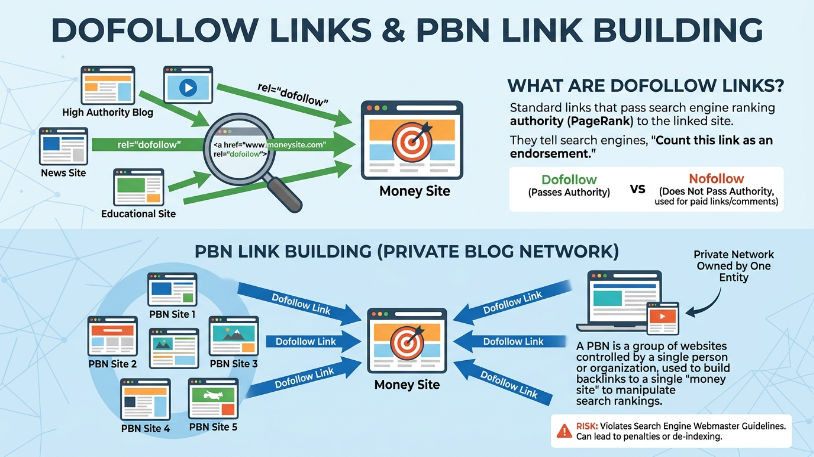
In PBN link building, the dofollow requirement is absolute. The entire purpose of a PBN link is to pass equity from the PBN domain to the money site. A nofollow PBN link passes zero equity, contributes nothing to the money site’s authority, and is an entirely wasted placement at whatever cost was paid for it.
How to verify a PBN link is dofollow before paying
Ask any PBN provider before placing an order: “Are all placements standard dofollow links with no rel attributes?” and “Do you use rel=sponsored on paid placements?” A quality provider will confirm dofollow placement as standard. Any provider who mentions using rel=sponsored is explicitly marking your paid link as paid — avoid them.
After a link is placed, verify dofollow status by: right-clicking on the linking page in your browser and selecting “View Page Source,” then searching (Ctrl+F) for your domain URL. The HTML around your link should look like <a href="https://yourdomain.com/target-page">anchor text</a> with no rel attribute. Alternatively, check the link in Ahrefs Backlinks report — the rel attribute column will show “dofollow” or the specific rel value if any is present.
The dofollow requirement in niche edits
The same dofollow requirement applies to niche edits. Many content sites use nofollow for external links as a default policy — which means a niche edit placement on such a site would be nofollow unless the site owner specifically changes the attribute for your link. Always specify in your niche edit brief that you require a dofollow placement with no rel attribute. Our niche edits guide covers the full verification process for niche edit placements.
How to check if a link is dofollow or nofollow
Four methods to check whether any specific link is dofollow or nofollow:
Method 1: Browser source code (most reliable)
Open the linking page in your browser. Right-click anywhere and select “View Page Source” (or press Ctrl+U). Press Ctrl+F and search for your domain name or URL. Find the anchor tag containing your link. If it reads <a href="https://yourdomain.com"> with no rel attribute — it is dofollow. If it reads <a href="https://yourdomain.com" rel="nofollow"> — it is nofollow.
Method 2: Ahrefs Backlinks report
In Ahrefs Site Explorer, enter your domain and navigate to Backlinks. The table includes a column showing the link type (dofollow / nofollow) for each referring page. You can filter the entire report by link type. This is the fastest method for auditing your full backlink profile’s dofollow/nofollow ratio.
Method 3: Browser developer tools
Right-click specifically on the link text on the linking page and select “Inspect” (or “Inspect Element”). The HTML surrounding the link appears in the Elements panel. Look for the rel attribute within the <a> tag. This shows the exact attributes in the rendered HTML, which may differ from the source code if the page uses JavaScript to modify link attributes dynamically.
Method 4: SEO browser extensions
Browser extensions like Ahrefs SEO Toolbar, Semrush SEO Extension, and Moz Bar highlight dofollow and nofollow links on any page with colour coding. Dofollow links appear in green or blue, nofollow in grey or red, depending on the extension. This is the fastest method for quickly auditing whether links on a specific page are dofollow before approaching a site for a niche edit placement.
FAQ
What is the difference between dofollow and nofollow links?
A dofollow link is a standard hyperlink with no rel attribute — it passes PageRank and link equity from the source page to the linked page, directly contributing to the linked page’s authority and ranking potential. A nofollow link carries rel="nofollow" and was traditionally treated by Google as a directive not to pass equity. Since September 2019 Google treats nofollow as a hint rather than a directive, meaning it may occasionally follow nofollow links for crawling, but nofollow links still do not reliably pass PageRank for ranking purposes.
Does a nofollow link have any SEO value?
Yes, but through indirect mechanisms rather than direct equity transfer. Nofollow links from high-traffic sites drive referral traffic, branded search volume growth, and indexation acceleration. They also contribute to a natural-looking link profile — a profile with zero nofollow links looks suspiciously manufactured. However, nofollow links do not raise the linked page’s authority metrics in tools like Ahrefs DR or pass PageRank as ranking signals. For link building ROI, dofollow links should be the focus; nofollow links are a useful side benefit of natural brand activity.
Should PBN links be dofollow?
Yes, always. The entire purpose of a PBN link is to pass equity from the PBN domain to the money site. A nofollow PBN link passes zero equity and is a completely wasted placement. Always verify dofollow status before accepting any PBN link placement using browser source code inspection or Ahrefs. If a PBN provider uses rel=sponsored on your links, they are explicitly signalling to Google that the link is paid — which is counterproductive for both ranking effectiveness and penalty risk management.
What is a good dofollow to nofollow ratio?
Established sites typically show 60–75% dofollow and 25–40% nofollow. Newer sites building actively typically show 70–85% dofollow and 15–30% nofollow. The right ratio for your site depends on what your top-ranking competitors show in their Ahrefs Backlinks reports — always benchmark against the competitive norm for your specific niche rather than applying a generic guideline. A 100% dofollow profile is an unnatural signal; some nofollow links from social media, community platforms, and editorial publications are expected in any genuine brand presence.
What is rel=”sponsored” and do I need to use it?
rel=”sponsored” was introduced by Google in September 2019 for marking paid links including advertisements, sponsorships, and paid guest post placements. Google’s guidelines ask that paid links carry this attribute. In practice, using rel=”sponsored” on PBN links or bought placements explicitly tells Google the link is commercial — the opposite of what you want when trying to pass organic equity. Most professional link building practitioners leave paid placements as standard dofollow links rather than marking them with rel=”sponsored”.
Conclusion
The dofollow vs nofollow distinction is fundamental but not absolute. Dofollow links are the links that move rankings — they pass equity, raise URL Rating, and directly contribute to the authority scores Google uses in ranking calculations. Every PBN link, every quality niche edit, every strategic outreach placement should be dofollow, always verified before payment is made.
Nofollow links are not worthless. Referral traffic, branded search, indexation speed, and profile naturalness are all real benefits. The sites that outperform in competitive SEO are not those that ignore nofollow links — they are those that build the brand activities that produce natural nofollow links (social media presence, community participation, press mentions) alongside the controlled dofollow link building that drives rankings directly.
The 2019 Google update changed nofollow from a strict directive to a hint — which means the old binary of “nofollow does nothing” is no longer entirely accurate. But for practical link building purposes, the rule remains: build dofollow, benefit from nofollow where it comes naturally, and never pay for a nofollow link as a primary link building investment.
Build a link profile with the right mix of equity-passing dofollow authority. Dofollow PBN backlinks — verified dofollow placement on every order, quality-controlled content, all niches accepted. Supporting guides: backlink equity — how dofollow links pass authority, anchor text strategy for dofollow link campaigns, niche edits — dofollow link insertions on aged pages, complete PBN SEO guide, Google penalties — dofollow link patterns to avoid, and our social signals and SEO guide for natural nofollow link building.

Ben Davis is a seasoned SEO strategist with over a decade of hands-on experience in off page SEO, link building, and private blog network management.
He has helped 600+ agencies and professionals achieve top rankings in competitive niches including iGaming, crypto, CBD, and finance through data driven PBN strategies.