


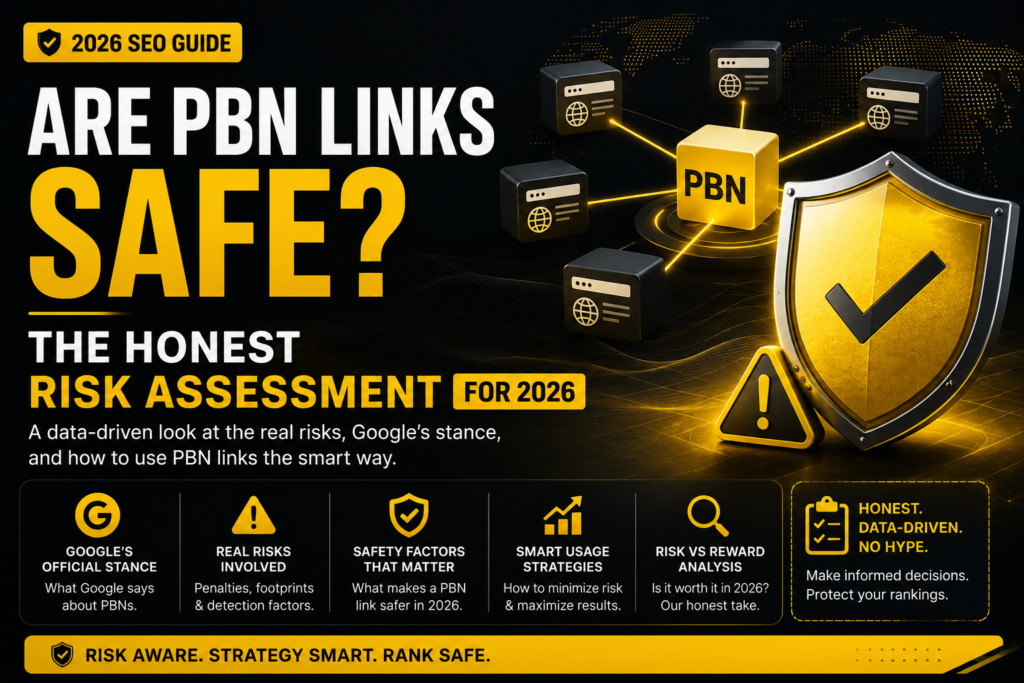
The question “are PBN links safe” deserves a direct answer rather than a marketing dodge. The short version: they are not safe in the sense of being Google-approved, but they are not as dangerous as most SEO scare content suggests when executed correctly. The long version is more useful what the actual risks are, what makes them higher or lower, how Google detects PBN networks, what happens if your links are detected, and how to make an informed decision about whether the risk profile is acceptable for your specific situation. This guide gives you the honest assessment that most PBN providers avoid because it involves admitting that their product carries real risk, and that most PBN scare content avoids because it overstates risk to push readers toward more expensive white hat services.
Table of Contents
- The honest answer: not safe, but manageable
- How Google detects PBN links
- What actually happens if your PBN links are detected
- What makes PBN links more or less risky
- Who uses PBN links and why
- PBN links vs white hat link building: the real comparison
- How to decide if PBN links are right for your site
- FAQ
- Conclusion
Key Takeaways
- PBN links are not Google-approved and do violate Google webmaster guidelines — this is not disputed. The question is what the realistic consequences of using them are.
- Most PBN link detection happens algorithmically through SpamBrain, not through manual review. Algorithmic detection produces ranking demotions, not the catastrophic manual penalties that SEO scare content describes.
- Quality execution dramatically reduces detection risk: diverse hosting infrastructure, genuine 600+ word article content, gradual indexation, conservative anchor text, and topically relevant domains all reduce the signals Google uses to identify networks.
- The top-ranking pages for competitive commercial keywords in most niches contain PBN links. The risk-averse path of pure white hat link building in competitive niches often means accepting permanent second-page positions.
- The correct risk assessment is not “are PBN links safe or unsafe” — it is whether the risk-adjusted ROI of PBN links compares favourably to the risk-adjusted ROI of the alternatives for your specific situation.
The honest answer: not safe, but manageable
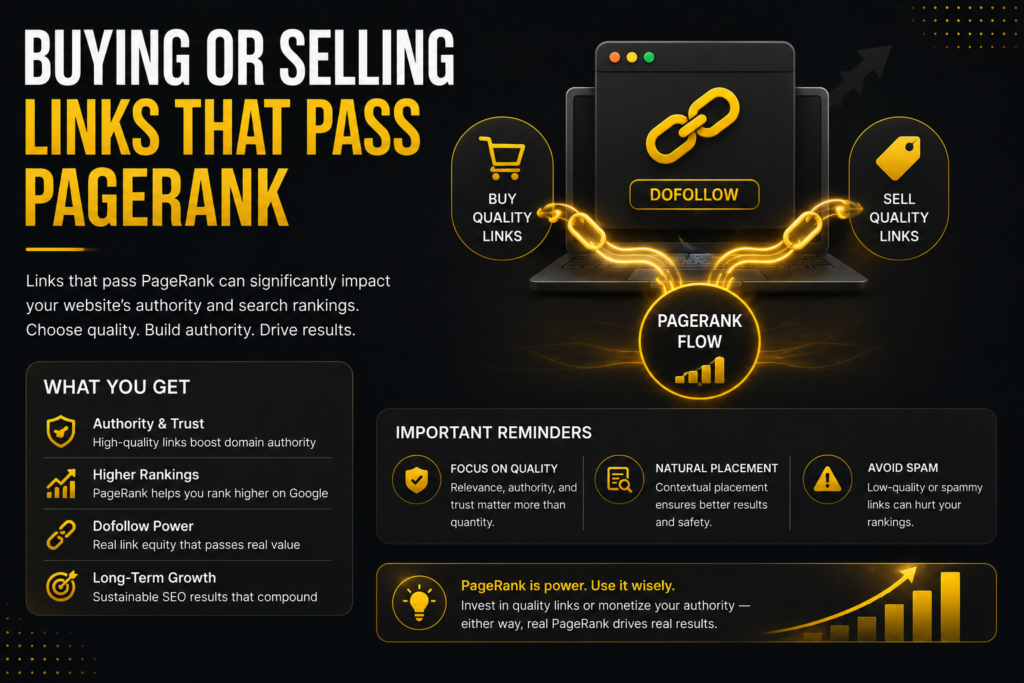
PBN links are a grey hat SEO tactic. “Grey hat” means: not approved by Google, not zero-risk, but widely used by practitioners who have made a deliberate calculation that the ranking benefits justify the risk profile. This is different from “safe” and different from “catastrophically dangerous.” It sits in between, and where it sits on that spectrum depends entirely on execution quality.
Google guidelines state clearly that buying or selling links that pass PageRank violates their policies. PBN links pass PageRank — that is their entire purpose. So by Google own standards, they are a violation. The question is: what happens in practice when sites use PBN links, and how severe are the consequences when detection occurs?
The honest answer to both questions is: less dramatic than the scare content suggests, and more manageable than PBN marketing content implies. PBN links do not routinely cause catastrophic penalties. They do sometimes cause algorithmic ranking adjustments. Quality PBN links rarely cause manual actions. The sites ranking on page one for your target keywords have almost certainly used PBN links at some point and are continuing to benefit from them.
This is the context that both sides of the debate omit. Our white hat vs grey hat SEO guide covers the full spectrum and the honest risk assessment in detail — this article focuses specifically on the safety question that buyers are asking.
How Google detects PBN links
Understanding how detection actually works is the foundation of honest risk assessment. Google uses two systems to identify PBN links — automated algorithmic detection through SpamBrain, and manual review by quality assessors. Each has different implications.
SpamBrain: the primary detection mechanism
SpamBrain is Google AI-powered spam detection system that processes billions of links looking for patterns that indicate manufactured link schemes. It identifies PBN networks primarily through: shared hosting infrastructure signals (multiple sites on the same IP ranges or hosting accounts), coordinated publishing patterns (groups of domains publishing similar content structures within short time windows), velocity anomalies (large numbers of new referring domains appearing simultaneously), anchor text coordination (same commercial keywords appearing in new domains all pointing to the same money site), and thin content that fails Google Helpful Content quality assessment.
When SpamBrain identifies a network or a suspicious pattern, it typically devalues the links — reducing or eliminating the equity they pass — rather than immediately issuing manual penalties. This is the most common outcome of PBN detection: links stop working rather than sites getting penalised. The money site ranking stabilises or drops slightly, but no manual action appears in Search Console.
Manual review: less common but more serious
Manual reviews are conducted by Google Search Quality team reviewers examining specific sites for guideline violations. Reviews are triggered by: algorithmic flags that recommend human verification. competitor spam reports through Google Search Console. sites in sensitive niches (YMYL) that attract more frequent quality review, and sites that have received previous manual actions.
A manual action for unnatural inbound links results in a Search Console notification and a defined recovery process — fix the issue and submit a reconsideration request. Manual actions are more serious than algorithmic devaluation because they require active remediation, but they are also less common than the SEO scare content implies. The full manual action and recovery framework is in our Google penalties guide.
What actually happens if your PBN links are detected
Detection does not mean instant site death. The realistic outcomes, from most to least common:
Outcome 1: Link equity devaluation (most common)
SpamBrain identifies the network or linking domain as low-quality and devalues those links — they stop passing equity. The practical effect: the ranking boost from those links stops working, and rankings may stabilise at a lower position or drift back toward where they were before the links were built. There is no Search Console notification, no manual action, no penalty to recover from — the links simply stop contributing. This outcome typically goes unnoticed unless the practitioner is tracking rankings closely.
Outcome 2: Core update algorithmic demotion
During a Google core update, sites whose link profiles contain patterns identified as manipulative may experience ranking drops. This is an algorithmic reassessment rather than a penalty in the traditional sense — recovery happens when the underlying issues are corrected and the algorithm re-evaluates. Core updates occur several times per year, meaning the exposure window between building low-quality PBN links and an algorithmic demotion may be weeks to months.
Outcome 3: Manual action for unnatural links (less common)
A human reviewer determines that the site has a pattern of unnatural inbound links and issues a manual action through Search Console. This is the outcome that SEO scare content focuses on, but it is less common than outcomes 1 and 2 for sites that are not building links at obvious scale or in obviously public networks. Recovery requires auditing the backlink profile, removing or disavowing toxic links, and submitting a reconsideration request. Timeline: typically 6–18 months from detection to recovery for link-related manual actions.
Outcome 4: Nothing detectably negative (common with quality links)
Quality PBN links — diverse hosting, genuine content, gradual indexation, conservative anchors — frequently produce no detectably negative outcomes. The money site accumulates authority, keywords rank higher, and the PBN campaign continues producing results across multiple update cycles. This outcome is not the guaranteed outcome of all PBN link building, but it is the consistent outcome of high-quality PBN link building, and it describes the link profile history of most sites that dominate competitive SERPs.
What makes PBN links more or less risky
| Factor | Higher risk | Lower risk |
|---|---|---|
| Hosting infrastructure | Same IP range across network sites | Diverse IPs, different hosting accounts |
| Content quality | Thin AI filler, sub-300 words, no topical coherence | 600+ words, genuine depth, topically relevant |
| Indexation timing | All links indexed on the same day or week | Gradual indexation spread over 3-4 weeks |
| Anchor text | All commercial exact match, same keyword repeated | Safe distribution: 5-8% exact match, mostly generic and branded |
| Network concentration | 80%+ of referring domains from one provider | Diverse sources: PBN + niche edits + editorial + citations |
| Domain selection | Generic high-DR, no topical relevance, zero organic traffic | Topically relevant, Trust Flow verified, some organic traffic |
| Niche scrutiny (YMYL) | Finance, health, legal — highest scrutiny | General commercial, ecommerce, local — standard scrutiny |
| Money site age | Brand new domain, first 3-6 months | Established site with existing organic authority |
Risk compounds across factors — a campaign that scores badly on multiple rows of this table is significantly riskier than one that scores badly on just one. The safest PBN campaigns are those that score well across all factors simultaneously: diverse infrastructure, quality content, gradual indexation, conservative anchors, mixed profile, topically relevant domains.
Who uses PBN links and why
PBN links are not a fringe tactic used by a small number of reckless operators. They are the primary link building mechanism in several major industries and a significant supplementary mechanism in most competitive SEO campaigns.
iGaming and casino SEO
The iGaming industry uses PBN links as its primary authority-building mechanism because editorial outreach is structurally unavailable — mainstream publishers will not link to gambling sites. The top-ranking casino, sports betting, and poker sites show referring domain profiles built primarily through PBN links, affiliate networks, and paid editorial placements. For more see our casino backlinks guide.
Finance, crypto, and fintech
Financial services content faces YMYL scrutiny that makes Google particularly attentive to link quality, but PBN links remain common in finance SEO because organic editorial link acquisition is slow and the commercial value of rankings is extremely high. Finance and crypto PBN campaigns require higher quality thresholds than general niches — full framework in our finance and crypto PBN links guide.
Affiliate site owners
Affiliate SEO — ranking review sites, comparison pages, and product recommendation content — relies heavily on PBN links because the commercial pages that generate affiliate revenue (reviews, comparisons, “best X” roundups) almost never earn organic editorial links. PBN links targeting these commercial pages are the standard mechanism for moving them up SERPs. Our PBN links for affiliate sites guide covers the specific strategy.
SaaS and local business SEO
SaaS companies in competitive categories use PBN links to bridge the authority gap during the first 12–18 months while content marketing matures. Local businesses use PBN links to dominate Local Pack rankings with relatively small link volumes — local SEO is the highest-ROI PBN use case because the referring domain threshold is low and the commercial value per ranking is high.
PBN links vs white hat link building: the real comparison
The safety question is only meaningful relative to the alternatives. The relevant comparison is not “PBN links vs no links” but “PBN links vs white hat link building” — since both are attempting to achieve the same goal of ranking improvement.
White hat link building: the real risks
White hat editorial outreach is often presented as zero-risk. It is not. Guest posts are explicitly listed alongside PBN links in Google link scheme guidelines when they are produced primarily for link building purposes rather than genuine editorial contribution. Paid editorial placements — even on legitimate publications — violate Google guidelines when they are not disclosed as sponsored content. The “white hat” label does not make a link safe — it makes it sound safe, which is different.
The real risk of exclusive white hat link building in competitive niches is not penalty risk — it is competitive failure risk. A site building only white hat links in a niche where all competitors are using PBN links will accumulate authority too slowly to close the competitive gap within commercial timelines. The “safe” strategy produces its own negative outcome: permanent second-page positions.
The honest risk-adjusted comparison
Quality PBN links: moderate penalty risk, high ranking effectiveness, results within 3–6 months, scalable volume, complete anchor text control.
White hat editorial outreach in competitive niches: low penalty risk, moderate ranking effectiveness, results in 12–24 months, limited scalability, limited anchor text control, and still technically violates Google guidelines if paid for.
The risk-adjusted ROI comparison is more nuanced than most SEO content acknowledges. For many sites and niches, quality PBN links with manageable risk profile outperform white hat outreach on risk-adjusted ROI — not because they are safe, but because the alternative has its own costs and risks that are rarely discussed.
How to decide if PBN links are right for your site
Three questions determine whether PBN links are appropriate for a specific situation.
Question 1: What does the competitive SERP look like?
Open Ahrefs and look at the backlink profiles of the top 5 pages ranking for your primary target keyword. Do they contain PBN links? If they do, you are competing in a niche where PBN links are the standard — not using them means competing at a structural disadvantage. If the top-ranking pages show entirely editorial backlink profiles from mainstream publications, the niche may be rankable without PBN links and the risk profile may not justify it.
Question 2: What is the commercial value at stake?
A keyword generating 1,000 monthly clicks worth £3 each in affiliate commissions has £3,000/month at stake from a page-one ranking. A keyword generating 100 monthly clicks worth £0.50 each has £50/month at stake. The risk management investment justified by a £3,000/month opportunity is different from what is justified by a £50/month opportunity. Higher commercial value justifies both more investment in quality execution and more tolerance for managed risk.
Question 3: Can you afford the downside?
The worst realistic PBN outcome — a manual action requiring 6–12 months of recovery effort — would it be survivable for your business? For a large business where organic search is one of several acquisition channels, the answer is probably yes. For a small affiliate site where this specific set of keywords represents the entire revenue model, the answer might be no. Risk tolerance should reflect actual financial exposure, not abstract safety preferences.
If your answers are: “competitors use PBN links,” “significant commercial value at stake,” and “the downside is survivable” — PBN links with quality execution are a rational strategic choice. If any of those answers is different, the risk-adjusted calculation changes accordingly.
FAQ
Are PBN links safe in 2026?
PBN links are not Google-approved and do carry real detection risk — this is not disputed. The practical risk level depends entirely on execution quality. High-quality PBN links with diverse hosting, genuine article content, gradual indexation, and conservative anchor text carry a manageable risk profile and are widely used by the sites holding top rankings for competitive commercial keywords. Low-quality PBN links from shared infrastructure with thin content and over-optimised anchors carry high risk and minimal equity. The tactic is not safe or unsafe in absolute terms — execution quality determines where it sits on that spectrum.
What happens if Google detects your PBN links?
The most common outcome is link equity devaluation — SpamBrain discounts the links and they stop passing ranking power, without a manual penalty or Search Console notification. The second most common outcome is a core update algorithmic demotion where rankings drop following an update. A manual action for unnatural inbound links — the most serious outcome — is less common and primarily affects sites using obviously low-quality or publicly known networks at significant scale. Manual actions require a reconsideration request process and typically take 6–18 months to resolve fully.
Do competitors use PBN links?
In most competitive commercial niches — iGaming, finance, legal, SaaS, affiliate SEO, local services — the answer is yes. Open Ahrefs on the top-ranking pages for your target keywords and examine their backlink profiles. Domains with high DR but low organic traffic on linking pages, article pages with no external backlinks supporting them, and coordinated anchor text patterns are common signals of PBN-assisted link profiles. The sites ranking above you on commercially valuable keywords are rarely doing so through editorial outreach alone.
Can PBN links cause a Google manual penalty?
Yes, in cases where the pattern of unnatural links is sufficiently obvious to trigger a manual review or where the site is in a YMYL niche that receives more frequent human quality assessment. However, manual penalties for PBN links are significantly less common than the SEO scare content implies. Most PBN detection is algorithmic — links stop working rather than sites getting penalised. Quality execution (diverse infrastructure, genuine content, conservative anchors) substantially reduces the probability of triggering manual review.
What is the safest way to use PBN links?
The safest PBN execution: use only providers who offer diverse hosting infrastructure across their network, require genuine 600+ word articles on every placement, deliver links gradually over 3–4 weeks rather than simultaneously, maintain Trust Flow minimums (TF 15+) and article-level URL Rating checks (UR 10+), and accept precise anchor text specification per link. Supplement PBN links with some organic earned links and citation placements to avoid concentration in a single link type. Never exceed the natural velocity baseline for your site age and existing authority.
Conclusion
PBN links are not safe. They are also not as dangerous as the most alarmist SEO content implies. They are a grey hat tactic with a real and manageable risk profile that varies significantly based on execution quality, niche scrutiny level, competitive SERP context, and the financial exposure of the site using them.
The honest answer to “are PBN links safe” is this: they are a calculated risk that the majority of sites holding competitive commercial rankings have decided is acceptable given their competitive context, commercial stakes, and quality execution capability. Whether that calculation applies to your specific situation depends on the three questions in the decision framework above — not on abstract safety principles that ignore the competitive reality of how commercial SERPs actually function.
The full risk framework — algorithmic detection mechanisms, manual action triggers, penalty recovery process, and the quality execution standards that minimise each risk factor — is in our Google penalties guide and our white hat vs grey hat SEO breakdown.
If you have decided PBN links are right for your situation — here is how to buy them correctly. Quality PBN backlinks — Trust Flow verified, URL Rating confirmed, diverse hosting, gradual indexation, anchor text specified per your brief. Supporting guides: buy PBN links — the five pre-purchase checks, complete PBN SEO guide, anchor text strategy, Google penalties — what detection actually looks like, and our ranking timeline guide.

Ben Davis is a seasoned SEO strategist with over a decade of hands-on experience in off page SEO, link building, and private blog network management.
He has helped 600+ agencies and professionals achieve top rankings in competitive niches including iGaming, crypto, CBD, and finance through data driven PBN strategies.